
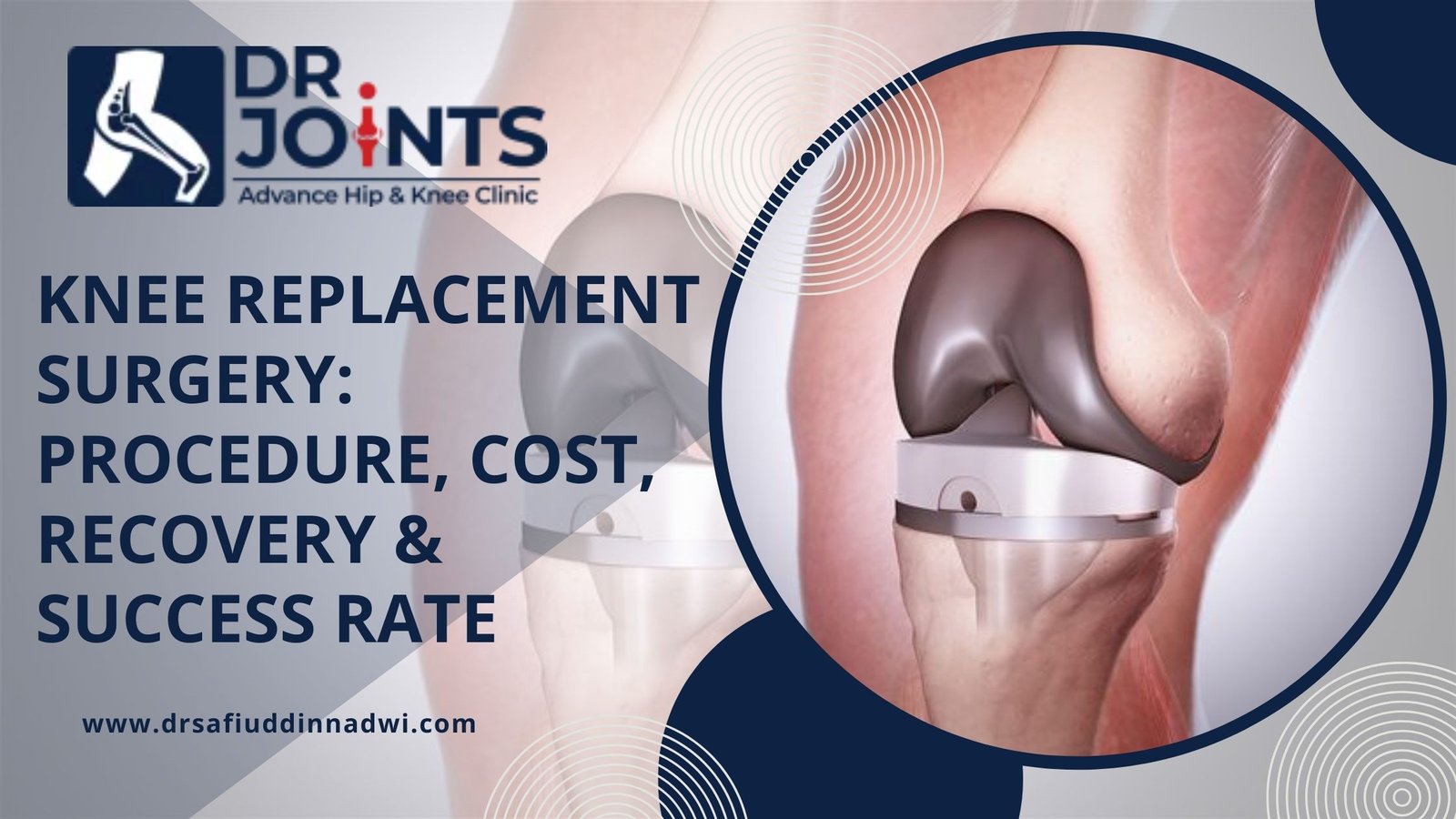
Knee Replacement Surgery: Procedure, Cost, Recovery & Success Rate
Knee pain can significantly affect your daily life, mobility, and overall quality of life. For many individuals, persistent knee pain caused by arthritis, injury, or wear-and-tear can make simple activities like walking, climbing stairs, or even sitting for long periods challenging. Knee replacement surgery offers a long-term solution for those whose knees have deteriorated beyond conservative treatments.
In this blog, we will explore the knee replacement procedure, types, costs, recovery process, success rates, risks, and how to choose the best knee replacement surgeons near you.
Understanding the Knee Joint & Why Replacement Is Needed
The knee joint is one of the largest and most complex joints in the body. It consists of:
- Bones: Femur (thigh bone), tibia (shin bone), and patella (kneecap).
- Cartilage: Smooth tissue covering the ends of bones, allowing pain-free movement.
- Ligaments: Provide stability and connect bones together.
- Meniscus: Shock-absorbing cartilage that cushions the joint.
Arthritis, particularly osteoarthritis and rheumatoid arthritis, gradually damages the cartilage, causing bone-on-bone friction, pain, swelling, and stiffness.
Early-stage knee problems may be managed with medications, injections, physiotherapy, or lifestyle modifications. However, advanced joint damage often requires knee replacement surgery to restore mobility and reduce pain.
What Is Knee Replacement Surgery?
Knee replacement surgery, also called knee arthroplasty, involves removing the damaged portions of the knee and replacing them with artificial implants made of metal, plastic, or ceramic materials.
Unlike joint preservation treatments such as cartilage repair or partial procedures, knee replacement provides long-lasting relief for severely damaged joints. The new artificial joint restores alignment, improves mobility, and significantly reduces pain.
Conditions That Require Knee Replacement Surgery
Knee replacement is usually recommended for the following conditions:
- Osteoarthritis: The most common reason for knee replacement. It occurs due to wear-and-tear over time.
- Rheumatoid Arthritis: Autoimmune inflammation causes joint damage and deformity.
- Post-Traumatic Arthritis: Arthritis developing after a serious knee injury.
- Failed Previous Knee Surgeries: Previous surgeries may not restore full function, leading to replacement.
Symptoms That Indicate You May Need Knee Replacement
You may be a candidate for knee replacement if you experience:
- Persistent knee pain, even at rest or during sleep.
- Severe stiffness and knee deformity.
- Difficulty walking long distances or climbing stairs.
- Reduced ability to perform daily activities, affecting your quality of life.
Types of Knee Replacement Surgery
1. Total Knee Replacement (TKR)
The most common and widely recommended procedure. In total knee replacement, the entire damaged knee joint is replaced with an artificial implant.
Best suited for: Severe osteoarthritis or extensive joint damage.
2. Partial Knee Replacement
Also called unicompartmental knee replacement, only the damaged portion of the knee is replaced.
Advantages: Less invasive, quicker recovery, preserves healthy bone and tissue.
Limitations: Not suitable if arthritis affects multiple compartments of the knee.
3. Full Knee Replacement
Similar to total knee replacement but may refer to cases where more durable or high-performance implants are used. Ensures full coverage of the knee surface for long-term functionality.
4. Revision Knee Replacement Surgery
Performed when a previous knee replacement fails due to implant loosening, infection, or mechanical issues. Revision surgery is more complex and requires an experienced surgeon.
Knee Replacement Surgery Procedure – Step by Step
Pre-Surgery Preparation
Before surgery, patients undergo:
- Diagnostic tests: X-rays, MRI, and blood tests to assess joint damage.
- Fitness clearance: Evaluation of heart, lung, and general health to ensure safe anesthesia.
- Surgical planning: Surgeons select the right implant type and size.
During the Surgery
- Anesthesia: Either general anesthesia (patient asleep) or spinal anesthesia (numb from waist down).
- Damaged bone and cartilage removal: Precise removal ensures a perfect fit for the implant.
- Implant positioning: Metal and plastic components are carefully aligned for natural knee movement.
After the Surgery
- Pain control: Medications and regional blocks help manage post-operative pain.
- Early mobilization: Patients are encouraged to walk with support soon after surgery to prevent stiffness.
- Physiotherapy: Begins within 24–48 hours to restore motion and strength.
Advanced Techniques in Knee Replacement Surgery
Modern knee replacement procedures use advanced techniques for precision and faster recovery:
- Minimally invasive knee replacement: Smaller incisions reduce tissue damage and improve healing.
- Computer-assisted surgery (CAS): Guides accurate implant placement for better alignment.
- Robotic knee replacement: High precision, personalized joint replacement, and improved outcomes.
Benefits: Reduced pain, quicker recovery, improved joint function, and higher long-term success rates.
Knee Replacement Surgery Cost in India
The cost of knee replacement surgery in India varies based on several factors, including the type of implant, type of surgery, and hospital category. Here’s a clear breakdown:
Factors Affecting Cost:
- Type of Implant: Standard vs. premium implants. Premium implants last longer and provide better performance.
- Type of Surgery: Total knee replacement, partial knee replacement, or revision knee replacement.
- Hospital Category: Multi-specialty private hospitals, corporate hospitals, or government hospitals.
Average Cost Range in India:
- ₹1,50,000 – ₹4,00,000 per knee
- This usually includes: surgeon fees, hospital charges, implants, anesthesia, and post-operative care.
⚠️ Important Note: Cheaper options may compromise implant quality or surgical expertise, affecting long-term results. Always prioritize safety, quality implants, and experienced surgeons.
Contact Dr. Safiuddin Nadwi for Expert Knee Replacement Surgery
If you are considering knee replacement surgery, consult an experienced orthopedic surgeon to get a personalized treatment plan and safe surgery.
- Phone: +91 88818 87838
- Email: drsnadwi@gmail.com
Dr. Safiuddin Nadwi specializes in:
- Total & Partial Knee Replacement
- Minimally Invasive & Robotic-Assisted Knee Surgery
- Faster Recovery & Patient-Centered Care
Reach out today to schedule a consultation and learn about the most suitable knee replacement options for you
Recovery After Knee Replacement Surgery
Immediate Recovery (First Week)
- Pain management with medications and ice therapy.
- Walking with a walker or crutches.
- Early physiotherapy to prevent stiffness and blood clots.
Short-Term Recovery (1–3 Months)
- Gradual improvement in knee movement.
- Reduced pain and swelling.
- Increased independence in daily activities.
Long-Term Recovery (3–6 Months & Beyond)
- Most patients return to normal daily activities.
- High-impact sports should be avoided; low-impact exercises like walking, swimming, and cycling are recommended.
- Lifestyle adjustments and regular physiotherapy ensure long-term joint health.
Physiotherapy & Exercises After Knee Replacement
Rehabilitation is critical for successful recovery:
- Supervised therapy vs. home exercises: Both are effective, but regular guidance ensures correct movement patterns.
- Mistakes to avoid: Avoid overstraining, sitting cross-legged, or lifting heavy weights too early.
- Goal: Restore strength, flexibility, and confidence in the knee joint.
Success Rate of Knee Replacement Surgery
Knee replacement surgery has a high success rate:
- Pain relief: 90–95% of patients report significant reduction in knee pain.
- Implant lifespan: Modern implants last 15–20 years on average.
- Factors affecting success: Surgeon experience, patient compliance with rehabilitation, and quality of physiotherapy.
Risks & Complications of Knee Replacement Surgery
Although knee replacement surgery is safe, complications can occur:
- Infection: Rare but serious; requires prompt treatment.
- Blood clots: Prevented with medications and early mobilization.
- Implant loosening or wear: May require revision surgery.
Expert surgeons minimize risks through strict sterilization, precise implant placement, and careful post-operative care.
Life After Knee Replacement Surgery
Post-surgery, patients can enjoy improved mobility and quality of life:
- Walking, sitting, and climbing stairs are generally possible.
- High-impact sports and heavy labor are discouraged.
- Return to work and travel is possible within a few months, depending on job type.
Choosing the Best Knee Replacement Surgeons
Selecting the best knee replacement surgeons near you is crucial for successful outcomes:
- Look for experienced orthopedic surgeons with specialized training in joint replacement.
- Ask about the surgeon’s success rates, complication rates, and post-operative care protocols.
- Ensure proper follow-up and physiotherapy guidance.
Expert Knee Replacement Care by Dr. Safiuddin Nadwi
Dr. Safiuddin Nadwi is a leading orthopedic surgeon specializing in knee replacement surgery.
- Extensive experience in total and partial knee replacement.
- Focuses on minimally invasive and robotic-assisted procedures.
- Prioritizes safe surgery, faster recovery, and patient satisfaction.
Patients under Dr. Nadwi’s care receive personalized treatment plans for optimal outcomes.
Conclusion
Knee replacement surgery offers a life-changing solution for patients with severe arthritis or joint damage. It relieves pain, restores mobility, and improves the quality of life. Early consultation with an experienced orthopedic surgeon ensures the best results.
If you are struggling with persistent knee pain or stiffness, don’t wait—seek expert care from the best knee replacement surgeons near you and take the first step toward pain-free movement.