
Dr. Safiuddin Nadwi

Category: Health

January 29, 2026 by admin 0 Comments

Robotic Partial Knee Replacement: Is It Truly Better, Safer, and Worth the Cost?

Knee pain rarely starts strong. It builds slowly. At first, you feel discomfort after long walks. Then stairs begin to hurt. Sitting down and standing up take effort. Over time, pain controls your routine. You plan your day around what your knee allows.

Most patients try medicines, exercise, or injections. These options help for some time. When pain keeps coming back and movement keeps reducing, surgery becomes the real solution.

Doctors now offer robotic partial knee replacement to selected patients. People hear it gives better accuracy and faster recovery. They also hear it costs more. This creates doubt.

So the real question is simple. Does robotic partial knee replacement actually give better results and long-term value?

What happens inside an arthritic knee

Your knee joint has smooth cartilage covering the bone ends. This cartilage allows easy and pain-free movement. Arthritis slowly wears this surface down. As cartilage thins, bones begin to rub against each other. This causes pain, swelling, stiffness, and loss of movement.

In many patients, arthritis affects only one side of the knee. This happens because daily stress, posture, and body weight often overload one area more than others. The rest of the knee may remain healthy for years.

Why partial knee replacement exists

The knee has three main parts: the inner side, the outer side, and the area behind the kneecap. When damage stays limited to one part, replacing the entire knee removes healthy bone and tissue that still work well.

Partial knee replacement treats only the damaged section. The surgeon removes worn bone and cartilage from that area and places a small implant. Healthy bone, muscles, and ligaments stay intact.

This matters because ligaments guide natural knee movement. Keeping them helps the knee feel stable and normal after surgery. Patients often walk sooner and regain confidence faster.

Limits of traditional partial knee surgery

Traditional partial knee surgery relies on manual tools and visual judgment. Even skilled surgeons face limits. Every knee has a unique shape. Visibility inside the joint stays limited. Hand control always has small variation.

Minor alignment errors may not cause immediate problems. Over time, they can lead to pain, uneven wear, or early implant failure.

What robotic partial knee replacement changes

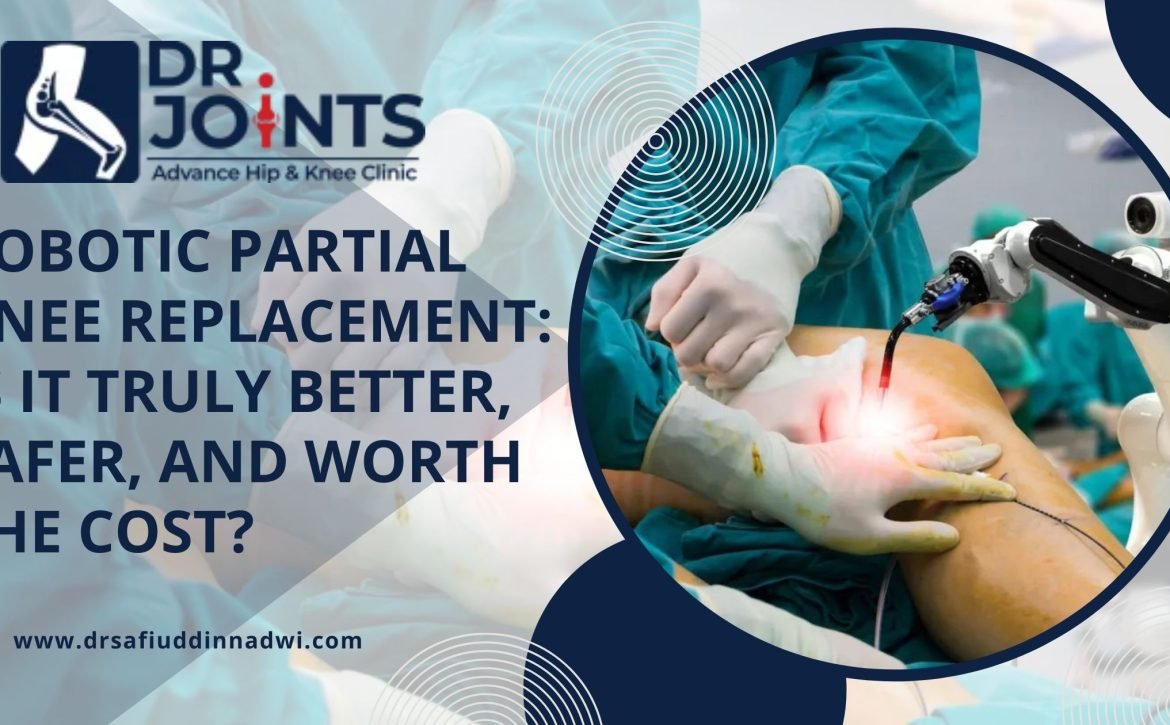
Robotic partial knee replacement improves how surgeons plan and perform surgery. The surgeon stays in full control. The system supports precision and consistency.

It improves three key areas: planning before surgery, controlled bone preparation during surgery, and confirmation of alignment before finishing.

Planning before robotic knee replacement surgery

Before surgery, doctors scan your knee. These scans create a detailed digital model. This model shows bone shape, joint angles, and movement.

Using this data, the surgeon plans exactly how much bone to remove, where the implant should sit, and how the knee should balance after surgery. This planning removes guesswork and reduces surprises in the operating room.

What happens during robotic surgery

During surgery, the surgeon exposes the knee through a small incision. The robotic system guides bone preparation. It allows movement only within the planned area. Healthy bone and soft tissue stay protected.

If alignment needs adjustment, the system updates instantly. The surgeon does not rely on estimation. The system confirms accuracy in real time.

Why precision affects long-term results

Every step you take places force on your knee implant. Poor alignment shifts this force unevenly. Over time, this can cause pain, stiffness, implant loosening, or early failure.

Robotic guidance improves alignment accuracy. Better alignment means smoother movement, better comfort, and longer implant life.

Robotic knee surgery benefits explained clearly

Robotic planning helps the implant fit your knee shape and movement. This improves comfort. Surgeons remove only damaged bone, which protects strength. Reduced tissue injury leads to less swelling and pain. Patients usually walk sooner and feel stable earlier. Preserved ligaments allow natural knee motion. Accurate placement lowers the risk of early implant wear.

Is robotic knee replacement surgery safer?

Yes, when performed by an experienced surgeon. Smaller incisions reduce infection risk. Less bleeding lowers complications. Controlled bone cuts protect nearby tissue. Real-time feedback improves safety throughout the procedure.

Understanding risks honestly

All surgeries carry risk. Possible issues include infection, blood clots, stiffness, or implant loosening over time. Robotic surgery reduces some risks but does not remove them. Surgeon experience and patient health remain critical.

Robotic partial knee replacement vs traditional surgery

Traditional surgery depends heavily on manual judgment, which can vary. Robotic surgery follows a planned approach, guides execution, and confirms balance before closing. This leads to more consistent outcomes.

Who benefits most from robotic partial knee replacement

Patients often do well when pain stays on one side of the knee, ligaments remain strong, alignment stays reasonable, and activity levels remain moderate to high. Doctors confirm this through scans and physical exams.

Who may need a different option

This surgery may not suit patients with arthritis in all knee compartments, severe knee bending or bowing, weak ligaments, or certain joint diseases. In such cases, total knee replacement may work better.

Recovery timeline explained

Most patients stand and walk within the first day. Pain stays controlled. Over the next two weeks, swelling reduces and movement improves. By weeks three to six, strength returns and daily tasks feel easier. After six weeks, many patients resume normal routines with guidance.

Why rehabilitation matters

Surgery repairs the joint surface. Rehabilitation restores strength and balance. Therapy improves bending, prevents stiffness, supports the implant, and speeds recovery. Skipping rehab delays results.

Understanding the cost difference

Robotic partial knee replacement costs more due to advanced planning systems, specialized equipment, and trained surgical teams.

Is the extra cost worth it?

Many patients feel it is. Faster recovery, less long-term pain treatment, better comfort, and lower chance of repeat surgery add value over time. Worth depends on age, lifestyle, and expectations.

Final Take: Is Robotic Partial Knee Replacement Worth It?

Robotic partial knee replacement is not for everyone. It works best for the right patient, with the right surgeon, at the right center. When these factors align, it offers accurate surgery, safer recovery, natural movement, and lasting comfort.

If knee pain limits your life and damage affects only one part of your knee, robotic knee replacement surgery deserves serious consideration.

January 29, 2026 by admin 0 Comments

Who Needs Robotic Hip Replacement? Age, Symptoms, and Doctor Advice

Hip pain does not start suddenly. It grows over time. At first, walking feels slow. Then stairs feel harder. Later, pain stays even during rest. Many people accept these changes and adjust their lives around pain.

Hip pain should not control daily life. When treatment no longer helps, doctors may suggest surgery. Robotic hip replacement offers better accuracy and control during surgery. It also supports smoother recovery.

This guide explains who may need robotic hip replacement, the right age, warning signs, and practical doctor advice.

What Is Robotic Hip Replacement?

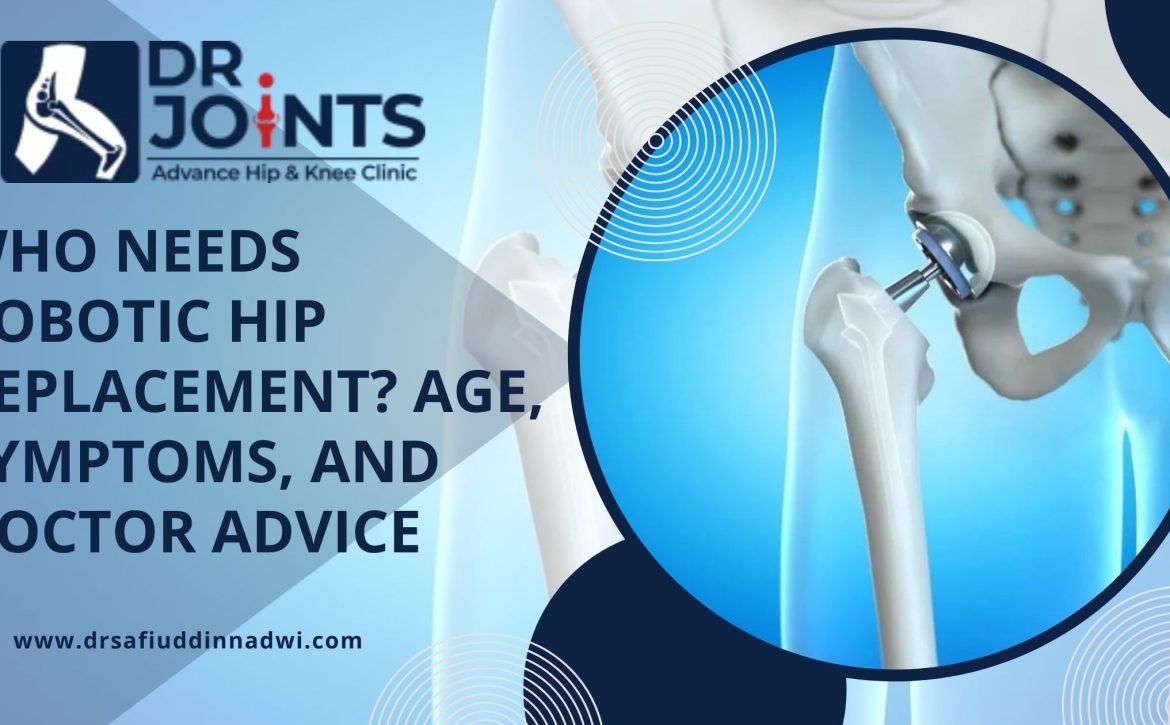
Robotic hip replacement is a planned joint surgery. A robotic system assists the surgeon during the operation. The system does not work on its own. The surgeon controls every step.

Before surgery, doctors study detailed scans of the hip. These scans help plan implant size and position. During robotic hip replacement surgery, the system guides movements within safe limits.

This approach protects healthy bone and soft tissue. It also improves joint balance.

Why Precision Matters in Hip Surgery

The hip joint carries body weight every day. Even small placement errors can cause long-term problems.

Poor alignment may lead to pain, instability, or early implant wear. Accurate placement helps the joint move smoothly and last longer.

This is why robotic hip replacement benefits focus on control and consistency.

Robotic vs Traditional Hip Replacement

Traditional hip replacement depends fully on manual judgment. Skilled surgeons achieve good results, but variation can occur.

Robotic assistance improves consistency.

It helps with:

  • Exact implant placement
  • Better joint balance
  • Reduced muscle strain
  • More predictable outcomes

These factors improve comfort during recovery and daily movement.

Who Usually Needs Hip Replacement?

Doctors recommend hip replacement when joint damage becomes severe.

Common causes include:

  • Osteoarthritis
  • Rheumatoid arthritis
  • Hip fractures
  • Loss of blood supply to the bone
  • Structural hip problems

As cartilage wears down, bones rub together. This causes pain, stiffness, and swelling.

Who Is a Good Candidate for Robotic Hip Replacement?

Doctors assess pain, movement, and daily impact.

You may need robotic hip replacement if:

  • Pain limits routine activities
  • Walking distance keeps reducing
  • Pain disturbs sleep
  • Medicines stop working
  • Scans show joint damage

An orthopedic surgeon hip specialist reviews all factors before advising surgery.

Does Age Matter for Robotic Hip Replacement?

Age alone does not decide surgery.

Most patients fall between 45 and 75 years. Some younger patients need surgery due to injury or bone disease. Some older patients recover well because they stay active.

Doctors focus on joint condition and overall health.

Symptoms You Should Not Ignore

Hip damage worsens slowly. Early signs often go unnoticed.

Common symptoms include:

  • Pain while walking
  • Difficulty climbing stairs
  • Groin or thigh pain
  • Morning stiffness
  • Reduced hip movement
  • Limping

Pain during rest often signals advanced damage.

When Surgery Becomes the Right Option

Doctors suggest surgery when pain becomes constant.

Key signs include:

  • Short relief from medicines
  • Limited benefit from therapy
  • Reduced walking capacity
  • Sleep disturbed by pain

At this stage, joint damage usually shows clearly on scans.

How Doctors Decide on Robotic Hip Replacement

Doctors follow a structured process.

They evaluate:

  • Pain level
  • Range of movement
  • Imaging results
  • Past treatments
  • Lifestyle needs

Doctors explain expected results clearly. Surgery reduces pain and improves movement. It does not recreate a natural joint.

Conditions Where Robotic Surgery Helps Most

Robotic systems help in complex cases.

Doctors often recommend robotic hip replacement surgery for:

  • Hip deformities
  • Risk of leg length difference
  • Obesity
  • Revision hip replacement
  • Combined spine and hip problems

Precision reduces long-term complications.

Who Should Avoid Robotic Hip Replacement?

Robotic surgery is safe but not suitable for all.

Doctors may delay surgery if:

  • Active infection exists
  • Bone strength is very low
  • Severe nerve problems are present
  • Rehab compliance is unlikely

Patient safety always comes first.

Key Robotic Hip Replacement Benefits

Patients often choose robotic surgery because it offers control and consistency. The system helps surgeons plan the procedure before surgery and follow that plan during the operation. This reduces guesswork and improves outcomes.

The main benefits include:

Better implant alignment

The system helps place the implant in the correct position and angle. Proper alignment improves joint movement and reduces stress on the implant.

Improved joint stability

Balanced placement allows the hip to move smoothly. This reduces the feeling of looseness or imbalance after surgery.

Lower dislocation risk

Accurate positioning reduces the chance of the joint slipping out of place during daily activities.

Less muscle damage

Robotic guidance helps protect nearby muscles and soft tissue. This often leads to less pain after surgery.

Faster early recovery

Many patients stand and walk sooner. They regain confidence in movement earlier than expected.

Together, these benefits support long-term joint comfort and better daily function.

Hip Replacement Recovery Time

Recovery depends on health and rehab effort.

Typical hip replacement recovery time includes:

  • Day 1–2: Standing and walking with support
  • Week 2–4: Less pain and better movement
  • Week 6: Resume basic daily tasks
  • 3 months: Comfortable walking

Physiotherapy plays a key role at every stage.

Life After Robotic Hip Replacement

Most patients notice steady improvement after recovery. Pain reduces. Movement feels easier. Daily tasks become manageable again.

After healing, many patients can:

  • Walk longer distances without pain
  • Sit comfortably for extended periods
  • Sleep through the night without discomfort
  • Return to work and daily routines

Doctors encourage regular movement. Walking helps maintain joint strength. Light stretching improves flexibility. Swimming and cycling remain safe options.

High-impact sports place stress on the joint and are best avoided. Protecting the joint helps it last longer.

Preparing for Robotic Hip Replacement Surgery

Preparation improves outcomes.

Doctors may advise:

  • Blood tests and imaging
  • Weight management
  • Stopping smoking
  • Strengthening leg muscles
  • Planning home support

Good preparation shortens recovery time.

How Long Does a Hip Implant Last?

Modern hip implants last 15 to 25 years.

Accurate placement improves implant life. Robotic systems support this precision.

Healthy habits further protect joint longevity.

Medical Advice Before Choosing Surgery

Doctors always suggest surgery only after careful evaluation. The goal is to improve quality of life, not rush treatment.

Experienced doctors advise patients to:

  • Do not ignore ongoing or severe pain
  • Stay active within safe limits
  • Follow physiotherapy advice regularly
  • Maintain a healthy body weight
  • Choose a surgeon with strong experience

Specialists like Dr. Safiuddin Nadwi emphasize that correct timing, clear planning, and patient commitment play a major role in successful outcomes.

Understanding the process and preparing well often leads to smoother recovery and better long-term results.

When Should You See a Doctor?

Consult a doctor if:

  • Pain lasts more than three months
  • Walking becomes difficult
  • Medicines stop helping
  • Hip stiffness worsens

Early advice prevents further joint damage.

Final Thoughts

Robotic hip replacement helps many patients regain comfort and movement. It improves accuracy and supports smoother recovery. Still, it suits only selected patients.

Doctors decide based on pain, scans, and lifestyle needs. Age alone never decides surgery.

If hip pain limits daily life, consult an orthopedic surgeon hip specialist. The right plan can restore confidence and mobility.